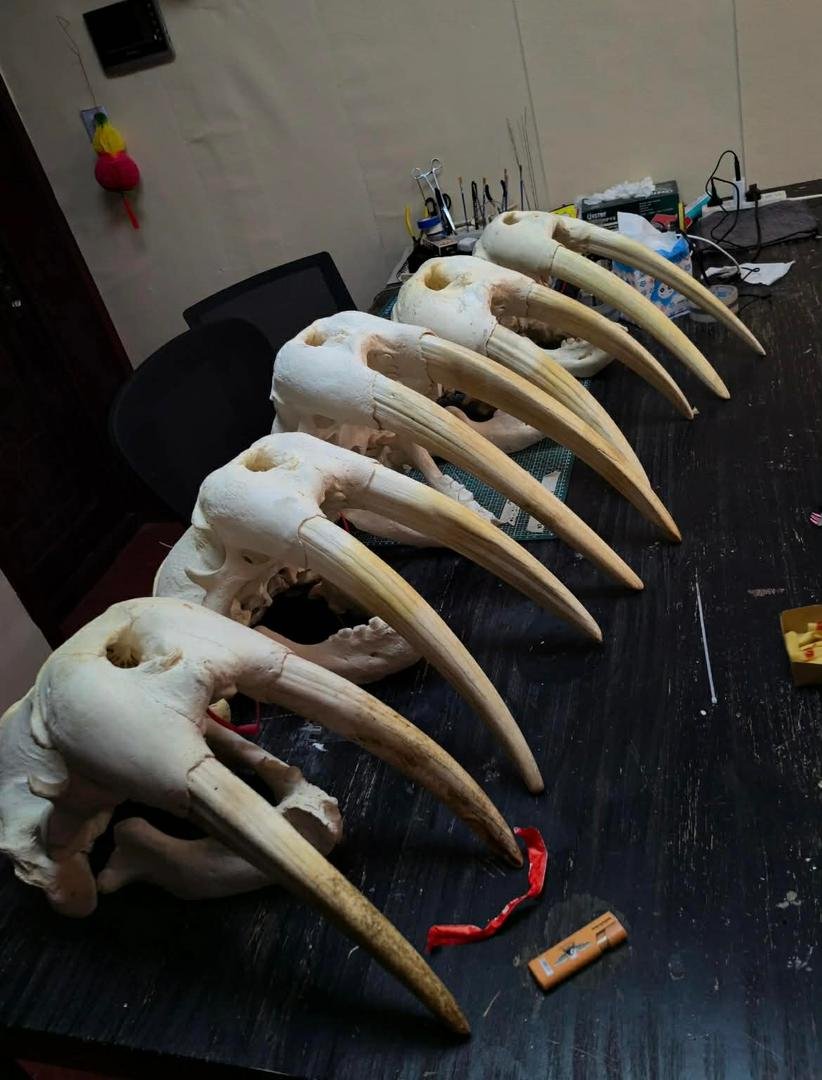
Buy Walrus Tusk (Walrus Ivory)
Price range: $1,000.00 through $1,100.00
This hand-etched walrus tusk celebrates the 19th-century maritime tradition of scrimshaw. Crafted from genuine Arctic ivory, the piece showcases the diagnostic translucent “oatmeal” texture of secondary dentine and depicts intricate, hand-inked scenes of historical seafaring and whaling history.
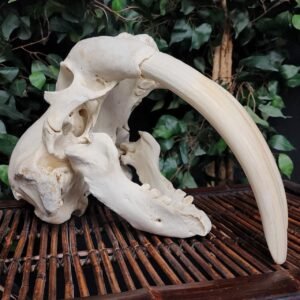
Walrus Ivory, historically known by the archaic term “morse,” is derived from the two modified upper canine teeth (tusks) of the walrus (Odobenus rosmarus). Found in both males and females, these tusks are multi-functional tools used for hauling the animal’s massive body onto ice floes, maintaining breathing holes in the winter, and establishing social dominance.
The material properties and cultural history of Walrus Ivory distinguish it as a premier medium for both indigenous artistry and maritime folk art. Whether as a raw specimen or a finely carved artifact, this material carries a weight of history and biological marvel that few other natural substances can match, making it a cornerstone for the serious collector of Arctic artifacts.
Biological Authentication: The Marbled Core of Walrus Ivory
To the professional collector and appraiser, Walrus Ivory is identified by its unique internal structure, which differs significantly from the dentine of other ivory-bearing species. The cross-section of a tusk reveals an oval shape with widely spaced indentations and two distinct types of dentine that serve as a definitive diagnostic for authentication.
The Two-Tier Dentine Structure
- Primary Dentine: The outer layer has a smooth, classical ivory appearance. It is typically white in newly taken specimens but transitions to a rich, creamy yellow with age. Unlike elephant ivory, this layer lacks fine Schreger lines, appearing more uniform to the eye.
- Secondary Dentine (Osteodentine): This is the “soul” of the tusk. The inner core is composed of secondary deposits with a marbled, crystalline, or “oatmeal-like” texture. When a thin cross-section is held to a bright light, this secondary dentine is strongly translucent—a feature impossible to replicate in synthetic materials.
Physical Profile and Varieties
| Species / Variety | Maximum Tusk Length | Tusk Appearance |
| Pacific Walrus | Up to 1.0 meter | Thicker, more robust, often highly indented. |
| Atlantic Walrus | Up to 0.95 meters | Often more slender, particularly in females. |
| Walrus Teeth | ~5 centimeters | Rounded, irregular “peg” shape. |
The Maritime Tradition: The Art of Scrimshaw
Scrimshaw refers to the specialized folk art of engraving and carving Walrus Ivory and bone, a practice that reached its zenith during the 18th and 19th-century whaling era. Sailors, during long and monotonous hours on whaling grounds, utilized the “hard byproducts” of the fishery to create decorative and practical objects.
The Process of the Mariner
Using simple tools like sail needles or pocket knives, artists etched intricate designs into the polished ivory surface. Once the engraving was complete, a pigment—typically lampblack, soot, or ink—was rubbed into the lines to create high-contrast imagery.
- Whaling Scenes: Detailed depictions of the hunt, featuring harpoons and whaleboats.
- Naval Architecture: Precise renderings of sailing vessels and rigging.
- Practical Objects: Walrus Ivory was preferred for items requiring length and durability, such as corset busks, yarn swifts, and tool handles.
Indigenous Heritage and the Ipiutak Culture
The use of Walrus Ivory by Arctic indigenous peoples predates European contact by millennia. For groups such as the Inuit, Inupiaq, and Yupik, this ivory was a critical resource for survival and a medium for deep spiritual expression.
Prehistoric and Thule Artistry
The prehistoric “Ipiutak culture” produced some of the most sophisticated ivory carvings in human history, including ceremonial masks found near Point Hope. Later, the Thule culture utilized ivory to create utilitarian objects like combs and ornate harpoon heads. With the onset of 16th-century trade, indigenous artists began producing ivory miniatures and cribbage boards, blending traditional motifs with European-influenced forms. Today, purchasing a legally sourced piece of indigenous-carved Walrus Ivory supports the economic self-sufficiency of Arctic communities and ensures the preservation of these ancient cultural traditions.
Curation, Ethics, and Preservation
As with all Arctic artifacts, Walrus Ivory is strictly regulated. We ensure all specimens are compliant with the Marine Mammal Protection Act (MMPA), requiring pre-1972 documentation for interstate sale or Alaska Native Handicraft exemptions for contemporary carvings.
Long-Term Maintenance
To preserve the luster of your ivory:
- Hydration: Apply a light coat of mineral oil or white Vaseline biennially to prevent desiccation and the widening of natural longitudinal cracks.
- Climate Control: Keep the ivory in a stable environment with moderate humidity to avoid “memory” cracks.
- Handling: Handle with clean hands to prevent the transfer of skin oils, which can cause uneven yellowing over decades.
Frequently Asked Questions (FAQs)
1. How can I tell if my Walrus Ivory is authentic?
Look for the secondary dentine core. If you see a marbled, crystalline “oatmeal” texture in the center of the tusk or base, it is a definitive sign of genuine walrus ivory.
2. Is it legal to own Walrus Ivory in the United States?
Yes, provided it is either “Pre-Act” (acquired before 1972) with a Letter of Determination or an “Authentic Native Handicraft” significantly altered by an Alaska Native artist.
3. Why are there cracks running down the length of the tusk?
These are natural longitudinal cracks originating in the cementum. They are a normal characteristic of the material’s aging process and often add to the character and antique value of the piece.
4. Can I buy a raw, uncarved walrus tusk?
Under the MMPA, raw ivory can only be sold to non-Natives if it is certified as “Pre-Act” (1972). Modern raw ivory is generally restricted to Alaska Native artisans for the creation of handicrafts.
5. How do I clean an old scrimshaw piece?
Use a dry, soft cloth. Avoid water or detergents, as they can seep into the etched lines and lift the historical pigments (ink or soot) out of the design.
| Dimensions | N/A |
|---|---|
| Length | 31cm |
| Depth | 37cm |
| Height | 67cm |
| Size | Big, Small |
Be the first to review “Buy Walrus Tusk (Walrus Ivory)”
Related products
Narwhal Tusk
Narwhal Tusk
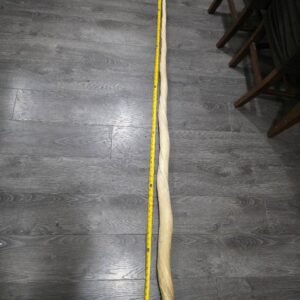
Narwhal Tusk
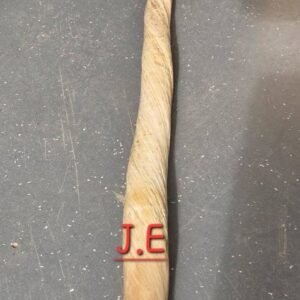
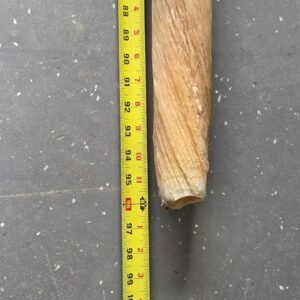
Narwhal Tusk
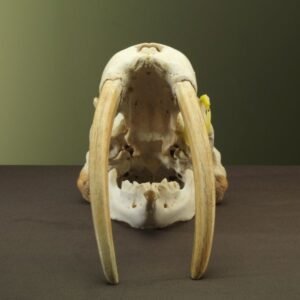
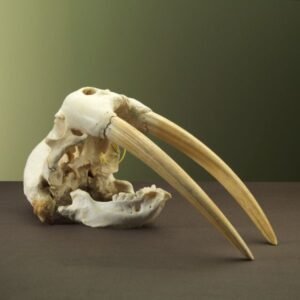
Walrus Tusk
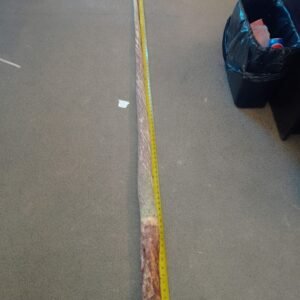
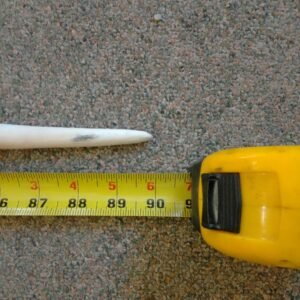
Narwhal Tusk
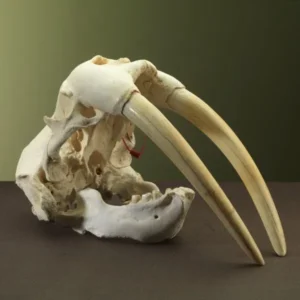
Walrus Tusk
Narwhal Tusk
Reviews
There are no reviews yet.