
Buy Narwhal Tusk
Price range: $1,000.00 through $6,000.00
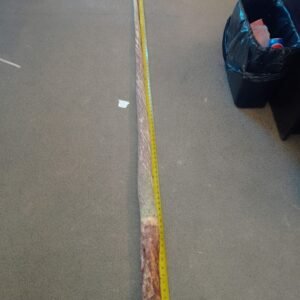
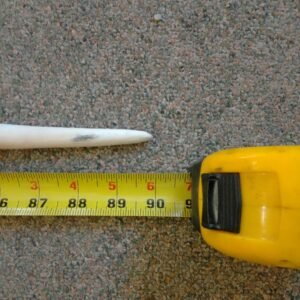
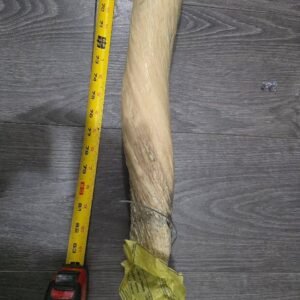
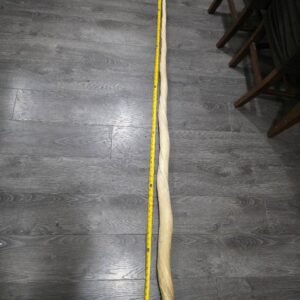
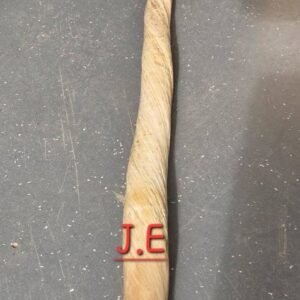
A museum-quality #1 Grade narwhal tusk, characterized by its remarkable straightness and iconic left-handed helix spiral. This specimen of Arctic ivory includes all necessary documentation for legal ownership and serves as a premier natural history centerpiece for high-end collections.
The Narwhal Tusk (Monodon monoceros), often referred to as the “unicorn of the sea,” is one of the most mysterious and sought-after biological artifacts in the world. This medium-sized cetacean inhabits the frigid waters of the Arctic and North Atlantic Oceans, defined by a breathtaking, spiraled tusk that projects from the upper jaw.
While the Narwhal Tusk is often viewed as a mythological horn, it is actually a highly specialized dental structure—a modified left maxillary canine tooth that erupts through the upper lip in a persistent counterclockwise (left-handed) spiral. For the elite collector, this specimen offers unique insights into mammalian evolution and serves as a profound statement of natural history.
Biological Development and Physiological Composition
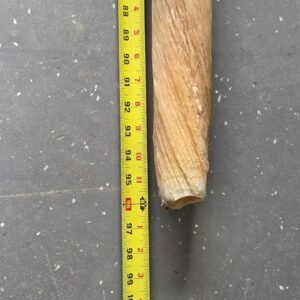
The Narwhal Tusk is a marvel of evolutionary engineering. Growing in a persistent left-handed helix, this ivory structure is characterized by a hollow interior housing a significant pulp cavity. While most males possess a single tusk, approximately 1 in 500 cases results in a “double-tusked” narwhal, a rare phenomenon where both the left and right canines erupt.
The Tusk as a Sensory Organ
Unlike the ivory of elephants or walruses, the Narwhal Tusk is highly innervated. It contains upwards of 10 million nerve endings that extend from the central pulp to the outer surface. This allows the tusk to function as a sophisticated sensory organ, detecting subtle fluctuations in:
- Water Temperature: Crucial for survival in the shifting High Arctic ice.
- Salinity & Pressure: Vital for navigating dark, deep-sea foraging grounds.
- Prey Detection: Assisting in identifying Arctic cod and other deep-sea nutrients.
Key Biological Parameters
Evolutionary Function and Social Signaling
The primary purpose of the Narwhal Tusk serves as a secondary sexual characteristic, functioning similarly to the antlers of a stag. Through a phenomenon known as hyperallometric scaling, the tusk grows at a disproportionately higher rate than the rest of the body, acting as an “honest signal” of biological fitness.
The Ritual of “Tusking”
Male narwhals engage in a behavior known as “tusking,” where they rub their tusks together above the water’s surface. Once thought to be combat, this is now recognized as a ritualized non-aggressive interaction used to assess fighting ability and social hierarchy. Furthermore, recent drone observations have revealed a more utilitarian function: narwhals have been seen using their tusks to “tap” and stun Arctic cod, facilitating easier consumption.
Commercial Grading and Valuation Standards
In the professional market, the valuation of a Narwhal Tusk is determined by a rigorous assessment of its integrity, spiral consistency, and dimensions.
Market Quality Tiers
- #1Quality (Museum Grade): Exceptional straightness, superior color, pronounced spiral, and an intact or naturally worn tip. These are in high demand and limited availability.
- #2Quality (Collector Grade): High aesthetic appeal, though may include a slight bend or a less pronounced spiral.
- #3Quality (Craft Grade): Specimens with significant bends or broken tips, often utilized for scientific teaching or artistic carving.
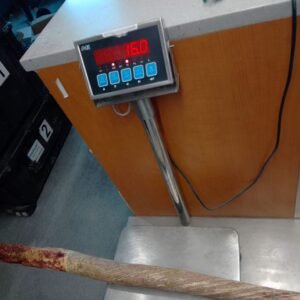
Valuation is significantly impacted by the tusk’s weight relative to its length. Larger, more massive specimens exceeding 230 cm (7’6″) that demonstrate a thick girth at the base are considered the most mature and robust, often commanding premium prices in the global antiquity market.

Ethical Sourcing and Sustainability
We are committed to the highest standards of wildlife stewardship. Every Narwhal Tusk in our collection is sourced exclusively through the Inuit subsistence hunt in the High Arctic. This traditional harvest provides essential food and resources for Arctic communities.
By purchasing an ethically sourced tusk, you are supporting the economic self-sufficiency of indigenous peoples and the preservation of their cultural heritage. Each specimen is inspected by federal wildlife officers and comes with the necessary documentation to ensure a 100% legal and transparent transaction.
Frequently Asked Questions (FAQs)
- Is it legal to own a Narwhal Tusk? Yes, in many jurisdictions, including the UK and EU, it is legal to own a narwhal tusk provided it is accompanied by proper CITES documentation and was sourced through legal, regulated hunts.
- Why do most narwhal tusks spiral to the left? This is a unique biological trait of the species. Even in rare “double-tusked” narwhals, both the left and right tusks spiral in the same counterclockwise direction.
- How should I display my Narwhal Tusk? Due to its length and weight, we recommend a custom-engineered vertical floor stand or a secure horizontal wall mount. Avoid placing it in direct sunlight to preserve the ivory’s natural color.
- Can a Narwhal Tusk break? While the ivory is flexible and strong, it can be brittle if dropped or subjected to extreme impacts. It should be handled with the care afforded to any high-value biological artifact.
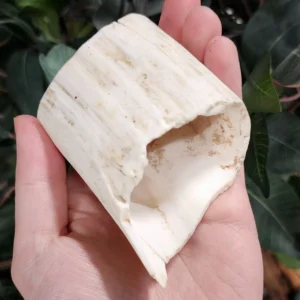
- How do I verify the authenticity of a tusk? Authentic tusks feature a hollow base, a distinct counterclockwise spiral, and a weight that matches the density of genuine ivory. All our tusks include official federal harvest tags for verification.
| Length | 3 Feet (90cm), 4 Feet (120cm), 5 Feet (150cm), 6 Feet (180cm), 7 Feet (210cm), 8 Feet (240cm) |
|---|
Be the first to review “Buy Narwhal Tusk”
Related products
Narwhal Tusk
Narwhal Tusk
All Products
Walrus Tusk
Narwhal Tusk
Narwhal Tusk

Narwhal Tusk
Reviews
There are no reviews yet.