Buy 6ft Narwhal Tusk
Original price was: $4,200.00.$3,600.00Current price is: $3,600.00.
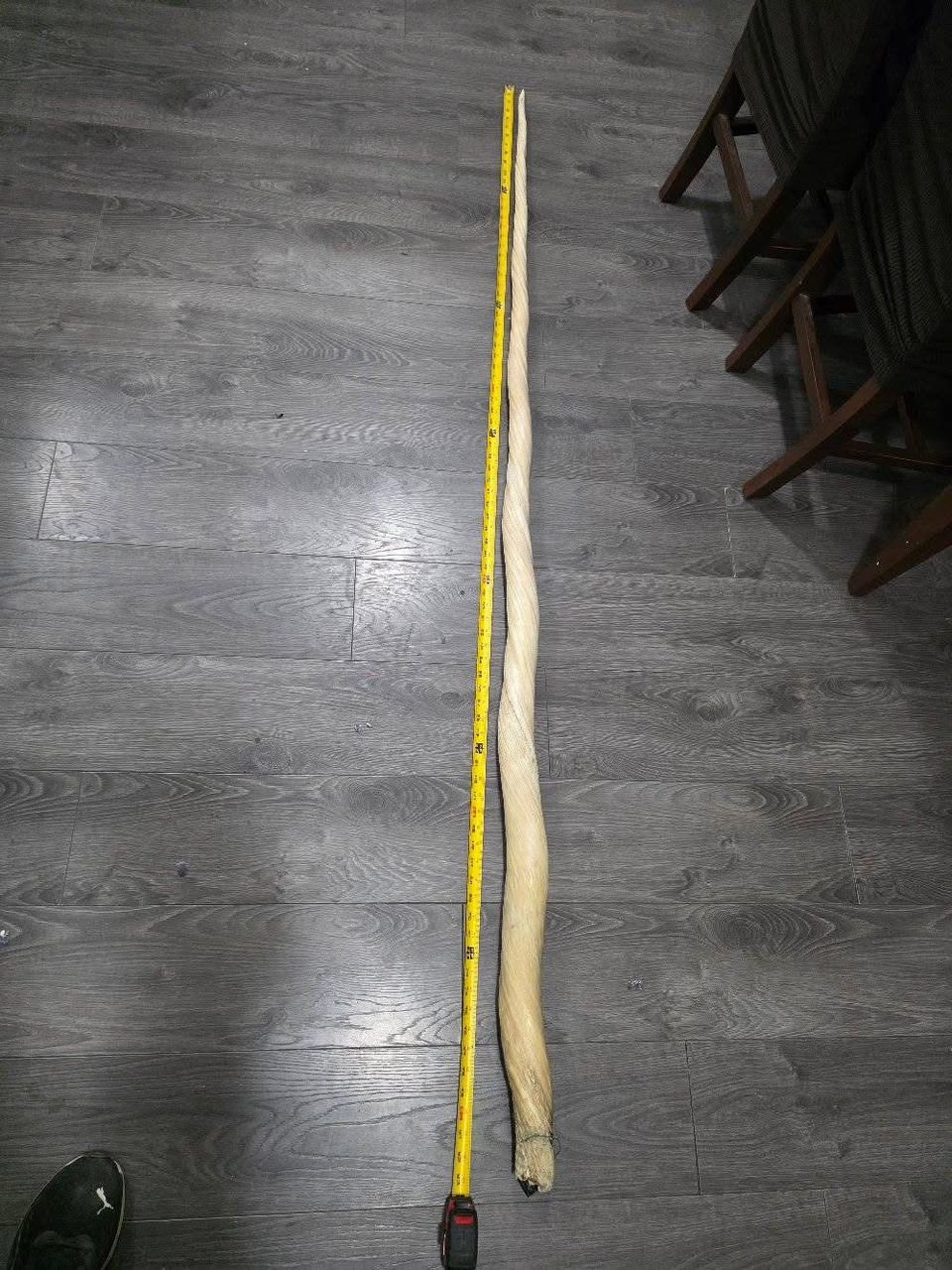
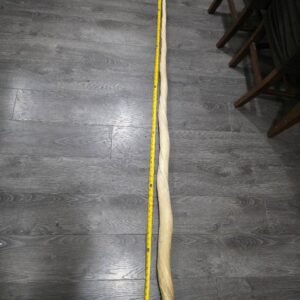
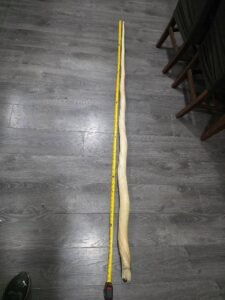
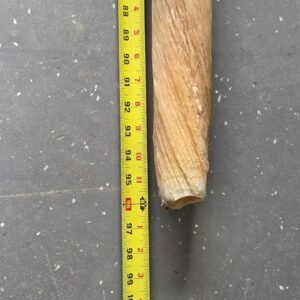
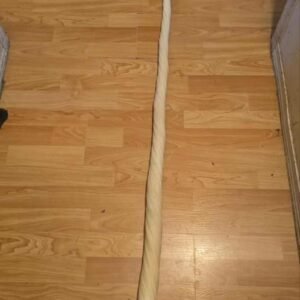
The collector’s standard. Standing at a human-scale height, this 6ft specimen commands attention with its robust base and elegant taper. It showcases a beautiful natural lustre and rhythmic helical ridges that catch gallery lighting perfectly. Includes all legal permits and federal harvest tags.
The 6ft Narwhal Tusk represents a major biological and aesthetic milestone in the life cycle of the Monodon monoceros. While a 5ft tusk reaches a person’s shoulder, the 6ft specimen stands at the height of a tall man, making it the first size in the collector’s hierarchy that can truly be described as “life-sized” in a human context.
To stand a 6ft Narwhal Tusk vertically is to encounter an object that matches the viewer’s own stature, creating a psychological presence that is both humbling and awe-inspiring. Biologically, this length indicates a fully mature male in his prime—a tusk that has survived years of navigation through the crushing weight of the Arctic ice shelf.
Biological Majesty and Spiral Anatomy
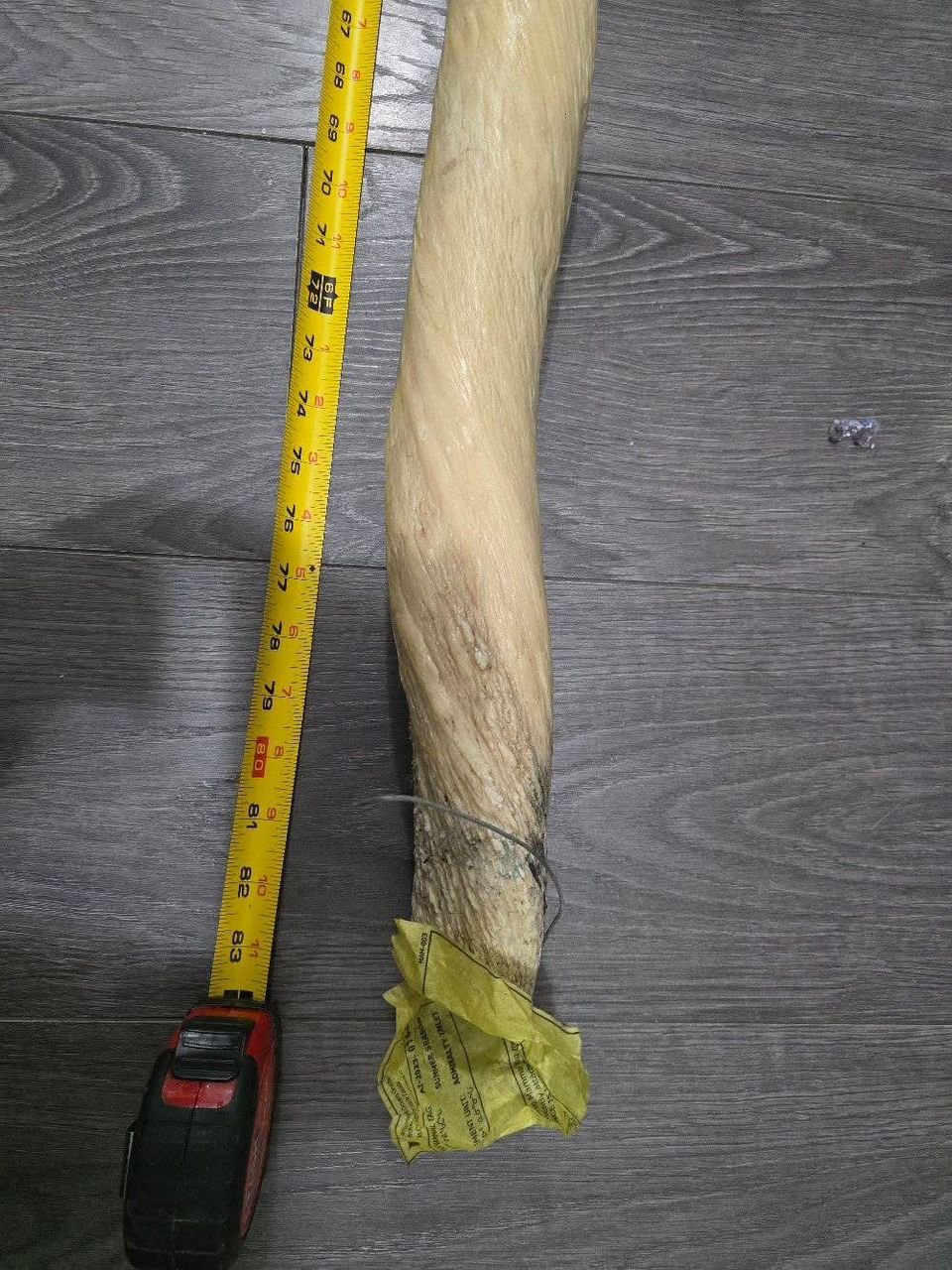
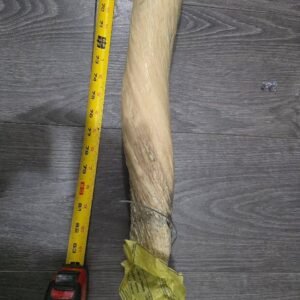
At the 6ft mark, the anatomy of the ivory shifts from slender to robust. Because the tusk grows continuously throughout the whale’s life, this length is often where the base (the “root”) shows a significant increase in diameter and wall thickness. This added girth is a biological necessity, providing the structural integrity required to support the leverage of the extra length as the whale swims.
The Story of the Spiral
The spiral architecture on a 6ft Narwhal Tusk often tells a complex story of survival. At this length, you can observe:
- Wear Facets: Slight smooth patches where the whale may have rubbed the tusk against other males in “tusking” rituals.
- Graceful Deviation: A 6ft specimen is long enough to exhibit a slight, natural curve—a deviation that proves the tusk is an authentic biological artifact rather than a straight, factory-made replica.
- Crystalline Resonance: If you gently tap the surface, the sound produced is high and clear, a testament to the dense, crystalline structure of the dentine.
History of the Alicorn: The Royal Scepter
In the history of the “Unicorn,” the 6ft Narwhal Tusk was the gold standard for royal regalia. When a tusk of this stature reached the courts of Elizabeth I or the Hapsburg Emperors, it was almost always displayed vertically to emphasize its towering nature. It was believed that only a beast of immense purity could carry such a “horn.
” This “musical” quality of the ivory, combined with its 6ft length, made it the preferred size for the creation of ceremonial staves and scepters for the highest-ranking clergy and nobility of the 16th century. To own a 6ft Narwhal Tusk today is to possess a “staff of legend” that transforms any room into a space of historical gravity.
Design Applications: Dominating Modern Spaces
From an interior design perspective, the 6ft Narwhal Tusk is a “divider” of space. It is long enough to be used as a standalone sculptural element that does not require furniture to support its visual weight.
Strategic Placement for Impact
- The Corporate Statement: In a boardroom or high-end law office, a 6ft tusk serves as a symbol of endurance and rarity, communicating a message of longevity.
- Corner Sculptures: Mounted in a weighted floor base, it turns a neglected corner into a cathedral-like focal point by drawing the eye upward.
- Symmetrical Pairs: For grand estates, a pair of tusks flanking a fireplace creates a frame of unmatched prestige.
Ethical Sourcing and Inuit Stewardship
As with all specimens in our gallery, the 6ft Narwhal Tusk is sourced exclusively through the Inuit subsistence hunt. In the high Arctic communities of Nunavut and Greenland, the harvest of a Narwhal with a 6ft tusk is a significant event. It provides hundreds of pounds of meat for the community, and the sale of the tusk provides funds for specialized hunting equipment, fuel, and heating.
The acquisition of this specimen is an act of cultural preservation. Each tusk is inspected by federal wildlife officers and issued a CITES (Convention on International Trade in Endangered Species) permit. This ensures that the trade is 100% legal, transparent, and biologically sustainable. When you purchase this 6ft specimen, you receive the original federal tag numbers, linking your piece directly to its Arctic origin.
Curation and Long-Term Maintenance
A 6ft Narwhal Tusk requires thoughtful curation to maximize its impact. Because of its length, the way light hits the spiral is crucial. We recommend ceiling-mounted spotlights to cast long shadows into the spiral grooves, emphasizing the 3D nature of the helical twist.
Environmental Stability
While ivory is incredibly durable, it prefers a stable indoor environment.
- Temperature: Keep the tusk away from direct heat vents or AC blasts to prevent rapid expansion.
- Mounting: At 6ft, the tusk has considerable leverage. Use custom-engineered steel mounts that grip the base securely while allowing the tip to remain “floating.”
Frequently Asked Questions (FAQs)
- Is a 6ft Narwhal Tusk legal to own in my country?
Ownership is legal in many regions (such as the UK and EU) provided the tusk is accompanied by its original CITES documentation. We ensure all legal permits are included with your purchase. - How do I clean the ivory of a 6ft tusk?
Use a dry, soft microfiber cloth to remove dust. Never use water or chemical cleaners, as ivory is porous and can absorb liquids, potentially leading to discoloration. - Does the tusk come with a display stand?
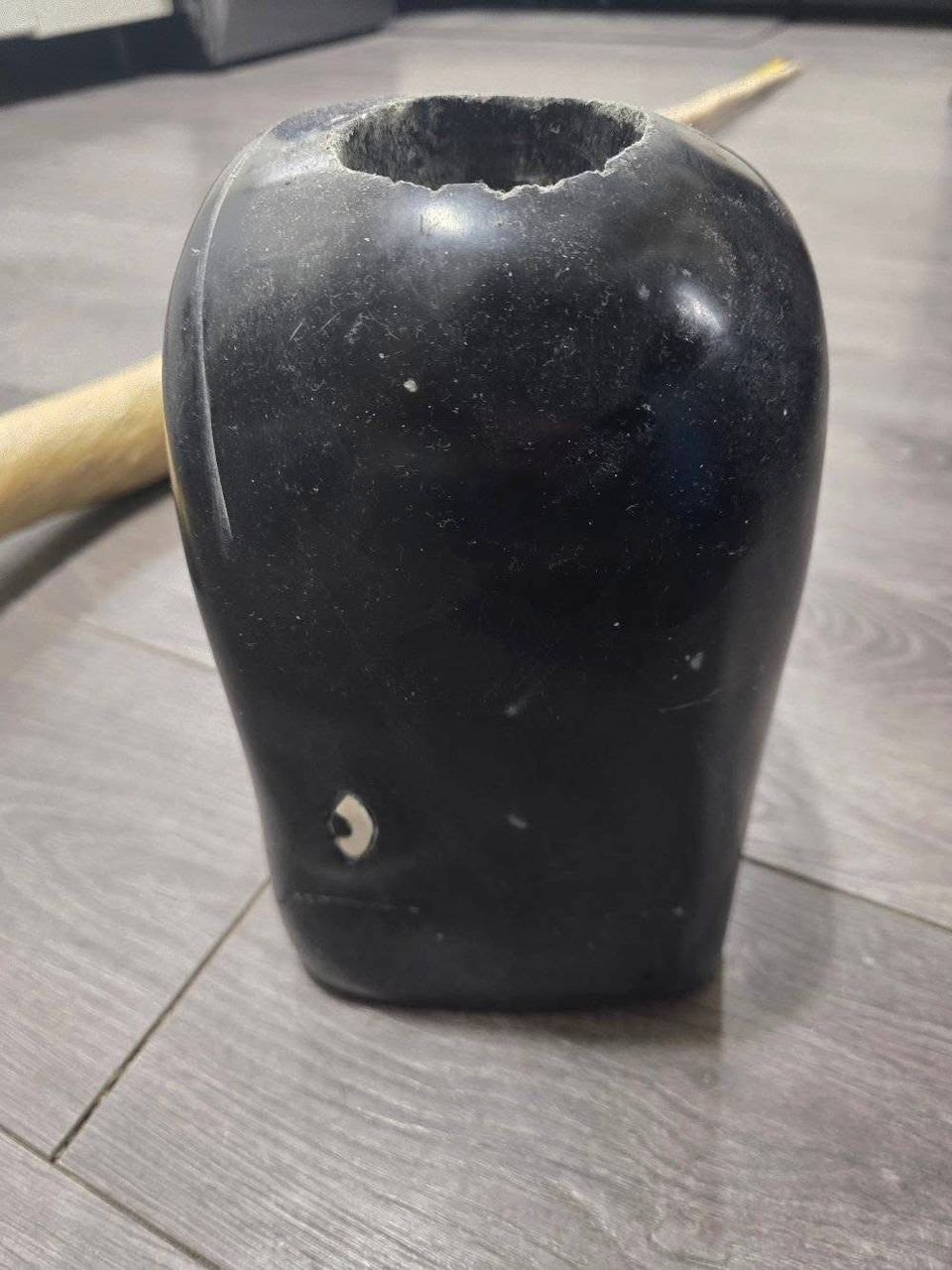
We offer several custom-made floor and wall mounts designed specifically to handle the weight and leverage of a 6ft specimen. - How is the 6ft length measured?
The tusk is measured in a straight line from the base to the tip. Due to the natural spiral, the “actual” length of the ivory if uncurled would be slightly longer. - How old is the whale that produces a 6ft tusk?
A tusk of this size typically belongs to a fully mature male, likely between 25 and 50 years of age, representing a lifetime of growth in the Arctic.
Be the first to review “Buy 6ft Narwhal Tusk”
Related products

Narwhal Tusk
All Products

Narwhal Tusk
Narwhal Tusk
Walrus Tusk
Walrus Tusk
All Products
All Products
Reviews
There are no reviews yet.