Uncategorized
Tri-Color Bear Rug For Sale: The Complete Buying Guide
Aug
A tri-color rug is one of the rarer finds in the black bear color-phase market — a single coat displaying three distinct natural tones at once, rather than the uniform black, solid cinnamon, or solid chocolate seen on most bear rugs. Instead of one color dominating the hide, a tri-color specimen shows patches or blended zones of black, brown, and blonde (or similar tonal combinations), giving the finished rug a visually layered, one-of-a-kind look that’s genuinely difficult to source.
This guide covers what makes a coat “tri-color,” how this rug compares in pricing and rarity to the single-color variants in the same product line, the legal and shipping rules that apply to any bear rug purchase, and how to evaluate a listing before you buy. We’ll close with the questions buyers ask most often about this specific product.
What Makes a Coat “Tri-Color”?
American black bears (Ursus americanus) show wide natural color variation — black, cinnamon, chocolate, blonde, and even rare bluish-grey or white phases all occur within the same species, with frequency shifting significantly by region. Most individual bears settle into one dominant color, which is why single-color rugs (standard black, cinnamon, deep cocoa) make up the bulk of the market.
A tri-color bear is the exception: an individual whose coat displays three visually distinct tones in the same hide, rather than one uniform color. This can show up as color-blocked patches, a gradient across the body, or highlighted guard hairs of a different shade layered over a base coat. Because this is a naturally occurring but genuinely uncommon trait, tri-color specimens are harder for dealers to source consistently than standard black or even single color-phase bears, which is the core reason they carry rarity value in the market.
What Is the Tri-Color Bear Rug?
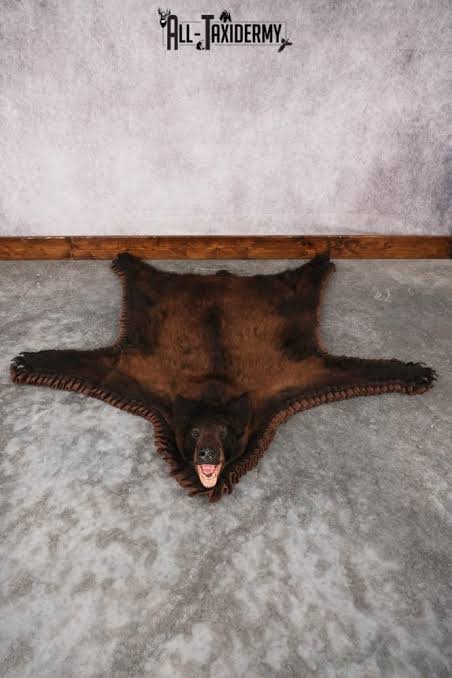
This full-size taxidermy rug mount is built specifically around a naturally multi-toned coat and finished to the same premier standard used across comparable rugs in this line:
- Raised head with an open-mouth pose for a dramatic, lifelike display
- A genuinely multi-color coat — the defining feature that sets this rug apart from single-color variants
- Felt bordering for a clean, finished edge
- Reinforced fabric backing for durability under normal, light-traffic display use
Like other rugs in this category, it’s designed to lie flat as a floor piece or be wall-mounted with rear hanging hardware.
Is It Legal to Buy a Tri-Color Bear Rug?
Yes. American black bear, in every natural color variation including tri-color specimens, is a legally and widely hunted species across Canada and the U.S., and rugs made from properly licensed harvests are an established, lawful product. A few regulatory points remain worth confirming before ordering:
- CITES Appendix II. American black bear is listed on CITES Appendix II because of its resemblance to other, more protected bear species — not because it’s endangered. International shipments of a tri-color rug require CITES export documentation, which a reputable dealer includes as standard.
- State-level import restrictions. Several U.S. states restrict incoming bear rug shipments regardless of documentation; confirm your state’s rules with the seller before ordering.
- Legal harvest origin. Ask for confirmation that the specimen came from a licensed hunt — worth double-checking on a rarer, higher-demand piece like this one.
Quick Legal Reference
| Requirement | Applies To | What to Confirm |
|---|---|---|
| CITES export permit | International shipments | Ask whether the tri-color rug ships with CITES paperwork |
| Legal harvest / hunting tag origin | All bear rugs | Confirm the piece is from a licensed, legal hunt |
| State import restrictions | Some U.S. states | Confirm your state allows incoming bear rug shipments |
How Much Does a Tri-Color Bear Rug Cost?
Because a genuine tri-color coat is rarer to source than single-color variants, this rug sometimes sits at a slightly different price point than its counterparts in the same product line — though grading and craftsmanship remain the bigger overall price drivers.
| Rug Type | Typical Price Range (CAD) | Notes |
|---|---|---|
| Tri-Color Bear Rug | $3,500 – $3,750 | Rarer natural coloring; supply-driven pricing |
| Standard Black Bear Rug | $3,500 – $3,800 | Classic jet-black coloring |
| Deep Cocoa Black Bear Rug | $3,500 – $3,800 | Dark chocolate color phase |
| Amber Ridge Cinnamon Black Bear Rug | $3,500 – $3,800 | Lighter, reddish-brown color phase |
| Winter Bear Rug | $3,500 – $3,800 | Prime, dense winter coat |
Given how infrequently true tri-color specimens come to market, availability tends to matter more than haggling on price — a well-graded piece that meets your color expectations is worth acting on when you find it.
Typical Size and Dimensions
A full-size tri-color bear rug typically measures roughly 6 to 6.5 feet in each dimension (nose to tail and across the front legs), consistent with other full-size bear rugs in this category, though exact size always depends on the individual animal rather than a fixed spec. Always confirm the listed measurements for the specific piece you’re considering.
How to Evaluate a Tri-Color Bear Rug Before You Buy
- Look closely at photos for genuine tonal variation. A true tri-color coat should show clearly distinguishable zones or blending, not just subtle shading within a single dominant color.
- Ask how the dealer defines “tri-color.” Terminology varies; confirm it reflects a naturally occurring coat rather than any artificial treatment.
- Check the grading tier. “Premier” and similar labels reflect the taxidermist’s internal standards — ask what criteria back the grade.
- Confirm CITES documentation is included for any cross-border order.
- Get exact measurements rather than relying on “full size” descriptions alone.
- Verify your state or country’s import rules before ordering, independent of the seller’s own documentation.
Caring for a Tri-Color Bear Rug
- Limit foot traffic, especially with dirty or wet footwear, which wears down hide and fur over time.
- Brush gently or vacuum on a low setting rather than shaking or beating the rug.
- Keep it out of prolonged direct sunlight, which fades natural coat coloring — a particular concern on a rug where the multi-tone effect is the main visual feature.
- Maintain moderate humidity in the display room to protect the tanned hide.
- Use a professional for deep cleaning; household detergents and steam cleaners can strip natural oils and damage tanned hide.
Frequently Asked Questions
What is a tri-color bear rug made from? A tri-color bear rug is made from the tanned hide of an American black bear (Ursus americanus) that naturally grew a coat showing three distinct tones, rather than a single dominant color. This is a naturally occurring but genuinely rare trait, not a dyed or artificially altered pelt.
Is it legal to buy a bear rug? Yes, buying a legally harvested black bear rug, including a tri-color rug, is lawful in Canada and most of the U.S., though American black bear is listed on CITES Appendix II, requiring export permits for international shipments. Reputable dealers include this documentation with every tri-color rug they ship.
Can you ship a bear rug to all US states? No — several U.S. states restrict incoming shipments of bear rugs regardless of documentation, so buyers should confirm their state’s rules with the seller before ordering a tri-color rug. This is worth checking directly with the dealer before purchase rather than assuming standard shipping applies everywhere.
How much does a black bear rug cost? A premier-grade full-size black bear rug, including a tri-color specimen, typically runs between CAD $3,500 and $3,800, though pricing for tri-color pieces is often driven more by availability and rarity than by grading alone. Standard single-color rugs generally fall in the same overall price band.
How rare is a tri-color black bear? Tri-color black bears are considerably less common than single-color individuals, since most black bears settle into one dominant coat tone (black, cinnamon, or chocolate) rather than displaying three distinct colors in the same hide. This relative rarity is what makes a tri-color rug harder for dealers to consistently source.
How do you clean a bear skin rug? Regular care for a tri-color rug involves gentle vacuuming on a low setting or light brushing of the fur, avoiding water, household detergents, and steam cleaning, which can damage the tanned hide and strip natural oils. Deep cleaning should go to a professional taxidermy or hide-care specialist rather than being attempted at home.
What size is a bear rug? A full-size tri-color bear rug typically measures roughly 6 to 6.5 feet in each dimension, though exact size depends on the individual bear, since these are natural products rather than manufactured to a fixed spec. Always confirm the listed measurements for the specific piece before ordering.
The tri-color rug stands out as one of the rarer, more visually distinctive pieces available in the black bear taxidermy market, thanks to a naturally occurring coat pattern that’s genuinely difficult to source consistently. Before buying, look closely at the coat’s actual tonal variation, confirm CITES documentation for cross-border orders, and check your state or country’s import rules. Given how infrequently true tri-color specimens appear, a well-graded piece that matches what you’re looking for is worth acting on promptly.

