Uncategorized
Winter Bear Rug For Sale: The Prime Pelt Buying Guide
Aug
A winter bear rug captures a black bear at the single point in its yearly cycle when its coat is at its absolute best — thick, dense, and glossy, built up over the fall to carry the animal through hibernation. Taxidermists and fur graders call this “prime” condition, and it’s the standard every serious bear rug buyer should understand before comparing pieces, because coat quality has a bigger impact on how a rug actually looks and feels than almost any other factor.
This guide explains what makes a coat “prime” or “winter” quality, how the Winter Bear Rug is graded and priced against comparable pieces, the legal and shipping requirements that apply to any bear rug purchase, and what to check before you buy. We’ll close with the questions buyers ask most often about this specific product.
What Makes a Coat “Winter” or “Prime” Quality?
Black bears, like most northern fur-bearing animals, grow their coat in cycles tied to the seasons. Through late fall and into winter, the coat thickens substantially — more underfur, longer guard hairs, and denser overall coverage — reaching its peak just before the bear settles into hibernation and going into early spring before the coat starts to shed as temperatures rise. A bear harvested during this window carries what the trade calls a “prime” pelt: full, lustrous, and free of the patchiness or thinning that shows up on a bear taken outside that window.
A winter bear rug specifically references this peak-condition coat. Compared to a pelt taken earlier in the year, a genuine winter/prime coat shows:
- Greater density, with less visible skin or thinning through the fur when parted
- Longer, fuller guard hair, giving the coat more visual depth and a fuller silhouette when mounted
- A glossier, healthier sheen, since a bear in prime winter condition typically carries better overall coat health going into the harvest
- Fewer rubs or bald patches, which are more common on bears taken in warmer months when they’re more active in dense brush
Northern Canadian bears in particular are frequently cited by dealers as producing some of the thickest, best-quality winter coats, since colder climates push fur density even further than more temperate regions.
What Is the Winter Bear Rug?
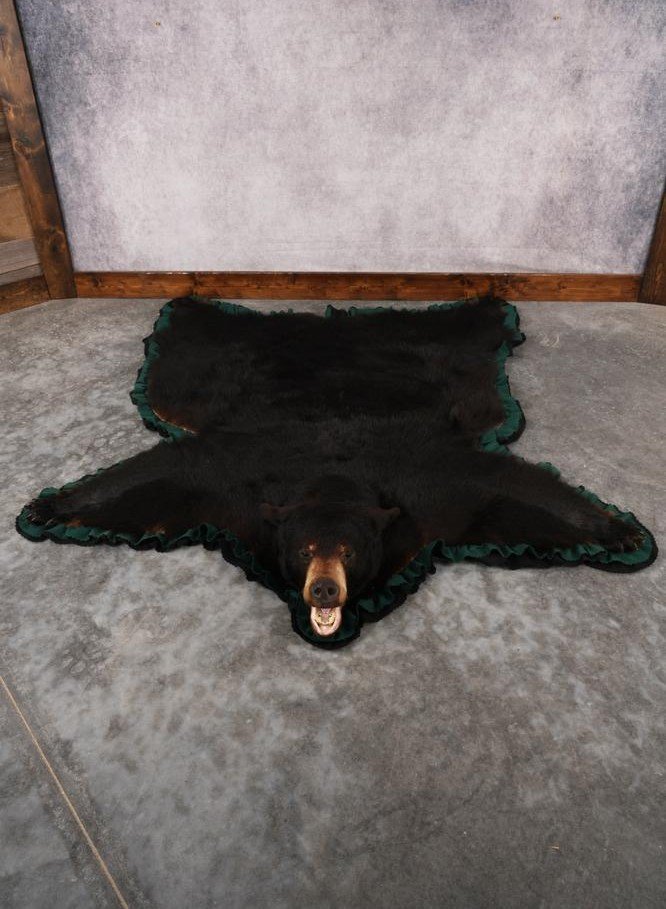
This full-size taxidermy rug mount is built around a coat specifically selected for its prime winter condition, and finished to the same premier standard used across comparable pieces in this category:
- Raised head with an open-mouth pose for a dramatic, lifelike display
- Thick, dense winter coat as the defining feature of this specific rug
- Felt bordering for a clean, finished presentation edge
- Reinforced fabric backing for durability under normal, light-traffic display use
Like other rugs in this line, it’s designed to lie flat as a floor piece or be wall-mounted using rear hanging hardware.
Is It Legal to Buy a Winter Bear Rug?
Yes. American black bear is a legally and widely hunted species across Canada and much of the U.S., and taxidermy rugs made from properly licensed harvests — winter-coat specimens included — are a well-established, lawful product category. A few regulatory points are still worth confirming before ordering:
- CITES Appendix II. American black bear is listed on CITES Appendix II because it resembles other, more protected bear species — not because it’s endangered itself. International shipments of a winter bear rug require CITES export documentation, which a reputable dealer includes as standard.
- State-level import restrictions. Several U.S. states restrict incoming bear rug shipments regardless of paperwork. Confirm your state’s rules with the seller before ordering.
- Legal harvest origin. Ask for confirmation that the rug came from a licensed hunt during a legal season, which for a winter-coat specimen typically aligns with the same season that produces the prime pelt quality buyers are paying for.
Quick Legal Reference
| Requirement | Applies To | What to Confirm |
|---|---|---|
| CITES export permit | International shipments | Ask whether the winter bear rug ships with CITES paperwork |
| Legal harvest / hunting tag origin | All bear rugs | Confirm the piece is from a licensed, legal hunt |
| State import restrictions | Some U.S. states | Confirm your state allows incoming bear rug shipments |
How Much Does a Winter Bear Rug Cost?
Prime, winter-coat rugs generally price in line with — or slightly above — standard black bear rugs, since coat density and fullness are among the qualities that most directly affect a taxidermist’s overall grading.
| Rug Type | Typical Price Range (CAD) | Notes |
|---|---|---|
| Winter Bear Rug | $3,500 – $3,800 | Premier grading, thick prime winter coat |
| Standard Black Bear Rug | $3,500 – $3,800 | Classic jet-black coloring |
| Deep Cocoa Black Bear Rug | $3,500 – $3,800 | Dark chocolate color phase |
| Amber Ridge Cinnamon Black Bear Rug | $3,500 – $3,800 | Lighter, reddish-brown color phase |
| Tri-Color Bear Rug | $3,500 – $3,750 | Multi-tone coat pattern |
Because coat condition compounds with color and grading, the highest-value pieces in this category tend to combine a rare color phase with genuine prime winter density — worth asking about directly if that combination matters to you.
Typical Size and Dimensions
A full-size winter bear rug typically measures roughly 6 to 6.5 feet in each dimension (nose to tail and across the front legs), though — as with any bear rug — exact size depends on the individual animal rather than a fixed manufacturing spec. Always confirm the specific measurements listed for the piece you’re considering, and ask whether the coat’s fullness was assessed as part of the listed grade.
How to Evaluate a Winter Bear Rug Before You Buy
- Ask directly about harvest season. A genuine winter/prime rug should be tied to a late-fall through early-spring harvest window; ask the dealer to confirm this.
- Look for density in photos, not just color — a prime coat shows minimal skin visibility even when the fur is parted.
- Check the grading tier. “Premier” and similar labels reflect the taxidermist’s internal standards; ask what specifically earned that grade.
- Confirm CITES documentation is included for any cross-border order.
- Get exact measurements rather than relying on “full size” descriptions alone.
- Verify your state or country’s import rules before ordering, independent of the seller’s own paperwork.
Caring for a Winter Bear Rug
- Limit foot traffic, especially with dirty or wet footwear, which flattens and damages even a dense, high-quality winter coat over time.
- Brush gently or vacuum on a low setting rather than shaking or beating the rug, to preserve the fullness of the fur.
- Keep it out of prolonged direct sunlight, which fades and dries out even a healthy, well-conditioned coat.
- Maintain moderate humidity in the display room to protect the tanned hide underneath the fur.
- Use a professional for deep cleaning; household detergents and steam cleaners can strip natural oils that keep a winter coat looking full and glossy.
Frequently Asked Questions
What makes a winter bear rug different from a regular bear rug? A winter bear rug is made from a black bear harvested during its prime coat season, when fur density, guard hair length, and overall fullness are at their peak. This results in a thicker, more lustrous rug compared to one made from a bear taken outside that seasonal window.
Is it legal to buy a bear rug? Yes, buying a legally harvested black bear rug, including a winter bear rug, is lawful in Canada and most of the U.S., though American black bear is listed on CITES Appendix II, requiring export permits for international shipments. Reputable dealers include this documentation with every winter bear rug they ship.
Can you ship a bear rug to all US states? No — several U.S. states restrict incoming shipments of bear rugs regardless of documentation, so buyers should confirm their state’s rules with the seller before ordering a winter bear rug. This is worth checking directly with the dealer rather than assuming standard shipping applies everywhere.
How much does a black bear rug cost? A premier-grade full-size black bear rug, including winter-coat and color-phase variants, typically runs between CAD $3,500 and $3,800, depending on coat density, color, and grading. A genuine prime winter coat can push a rug toward the upper end of that range.
What time of year is a bear’s coat the thickest? A black bear’s coat is thickest and fullest in late fall through winter, building up density ahead of hibernation, and it remains in prime condition into early spring before shedding begins. This window is exactly what defines a true winter bear rug in the taxidermy trade.
How do you clean a bear skin rug? Regular care for a winter bear rug involves gentle vacuuming on a low setting or light brushing of the fur, avoiding water, household detergents, and steam cleaning, which can strip the coat’s natural oils and damage the tanned hide. Deep cleaning should go to a professional taxidermy or hide-care specialist.
What size is a bear rug? A full-size winter bear rug typically measures roughly 6 to 6.5 feet in each dimension, though exact size depends on the individual bear rather than a fixed manufacturing size. Always confirm the listed measurements for the specific piece before ordering.

Click Here For More Information
